
Gardens of Marrakech October 2026





David’s tour highlights…
“Anima Gardens feel like a living artwork: bold planting woven through sculpture and indigenous African art, with surprise around every corner. It’s contemporary, playful and beautifully composed, yet still rooted in strong structure and atmosphere. You leave with fresh ideas about colour, texture and how gardens can tell stories – not just grow plants.”
Marrakech has a wonderful habit of surprising you. You can be in the lively swirl of the medina one moment, then step through an unassuming doorway and find yourself in a world of shade, birdsong and the soft, cooling sound of water. That contrast is exactly why this tour is such a treat for gardeners. I’m not just looking forward to showing you beautiful places; I’m looking forward to sharing the design thinking behind them – how Moroccan gardens use structure, scent and water to create calm, even in the heat.
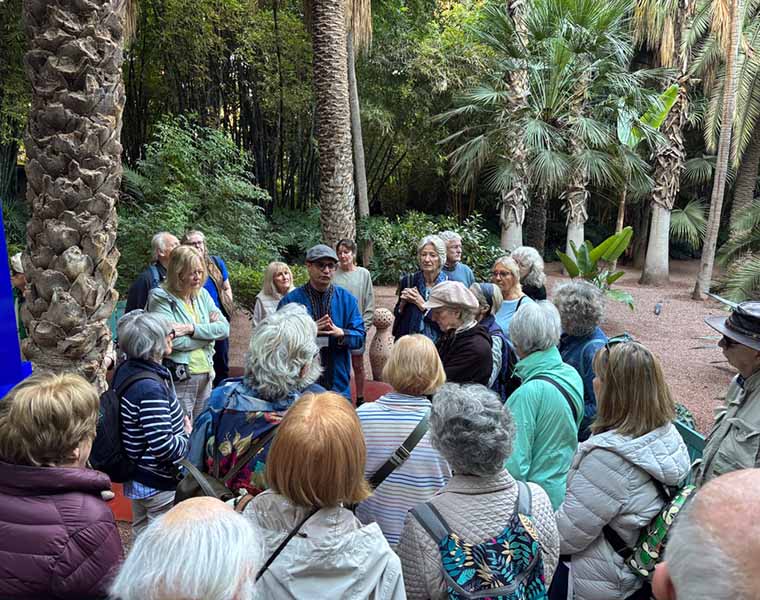
And the joy begins before we’ve even set foot in the city’s great historic gardens. Our base, Es Saadi Gardens & Resort Palace, sits in extensive grounds near the heart of old Marrakesh. The hotel’s craftsmanship is superb, but it’s the gardens that set the tone: mature planting, generous shade and that sense of being gently held by greenery. A walk with the Head Gardener is one of my favourite ways to start, because it immediately tunes your eye to what matters here – microclimate, shelter, and the clever use of foliage to keep a garden looking lush.
Marrakech garden design: the art of the courtyard
If you take one idea home from Marrakech, let it be this: gardens here are designed to change how you feel. They cool you, slow you down, and create privacy. Shade is not accidental; it’s engineered through trees, walls, pergolas and layered planting. Water isn’t simply decorative either – it’s a practical and sensory tool, used in channels, fountains and pools to refresh the air and add a steady, calming soundtrack.
You’ll also notice how much Moroccan gardens rely on strong geometry. Courtyards and paths are often laid out with symmetry and clear axes, which means the planting can be exuberant without becoming messy. Repetition is used brilliantly—repeated tree forms, repeated pots, repeated tiles – so your eye reads the space as harmonious. It’s a masterclass in how structure supports planting.
Bahia Palace gardens: orange blossom and private green rooms
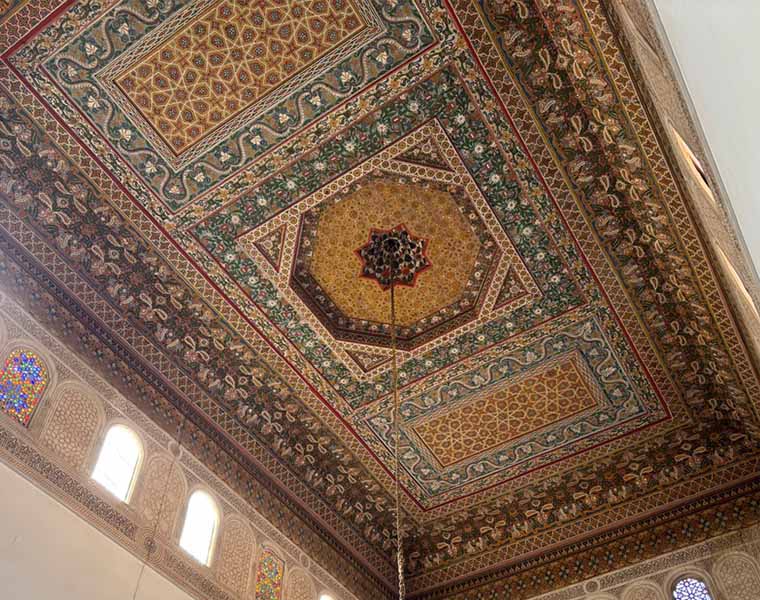
The gardens of El Bahia Palace capture the essence of Moroccan and Islamic style: elegant, intimate and deeply atmospheric. The palace itself was intended to be the greatest of its time, and you feel that ambition in the way the spaces unfold – rooms opening onto sunlit courtyards, then drawing you back into shade.
The planting is wonderfully evocative: cypress for vertical punctuation and formality, orange trees for glossy foliage and fragrance, and jasmine for that unmistakable, warm perfume that seems to hang in the air. Wells and fountains add both sound and sparkle, and the whole place feels like a sequence of private green rooms – sheltered, calm, and designed for lingering. As we walk, I’ll be encouraging you to notice how the garden is used to choreograph movement: bright to shaded, open to enclosed, scent to silence.
El Badi Palace: ruins, reflection and lingering grandeur
Where Bahia feels refined and complete, El Badi Palace is all about what remains and what your imagination fills in. Built over decades in the late 16th century, it once dazzled with marble and gold, and although much was dismantled, there is still a powerful sense of scale and drama.
For gardeners, this is a fascinating place because it shows how space and light can be as expressive as planting. The nooks and crannies, the long lines and the open courtyards create a different kind of beauty – one that’s quieter, more archaeological, and strangely moving. It’s also a reminder that gardens are living history: they change, they’re repurposed, they’re sometimes lost, but the spirit of the place can still be felt.
Jardin Majorelle and Yves Saint Laurent: colour, form and a painter’s eye
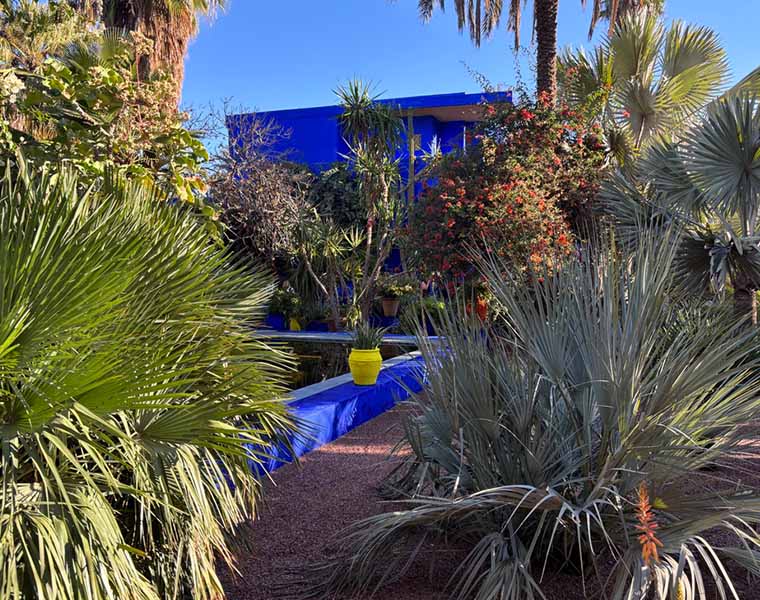
Jardin Majorelle is, quite simply, a garden that knows exactly who it is. Created in the 1920s by the French painter Jacques Majorelle, it’s composed like a work of art: marble pools, raised pathways, banana trees, bamboo groves, coconut palms and bougainvillea, all held together by that unforgettable Majorelle Blue.
What makes it so wonderful is the way colour and form are used with confidence. The blue intensifies everything around it – greens become richer, shadows become sharper, and flowers pop as if they’ve been turned up a notch. Water is everywhere: channels, lily-filled ponds and fountains, bringing movement, reflection and coolness.
Majorelle was an avid plant collector, and the garden still has that collector’s spirit – surprising shapes, bold textures, and a sense of curated abundance. After years of neglect, it was restored by Yves Saint Laurent, and today it feels both timeless and slightly surreal: a place where light, paint, foliage and architecture all collaborate.
Nearby, a brief visit to the Yves Saint Laurent Museum adds another layer to the story – how creativity moves between disciplines, and how a garden can become a lifelong source of inspiration.
Contemporary gardens of Marrakech
One of the real pleasures of this tour is that it doesn’t stop at the famous names. We also explore the expansive gardens of M. Ben Chaabane – garden designer, botanist, perfume maker and publisher – who was approached by Yves Saint Laurent to help restore Majorelle and develop a perfume that captured its essence. That link between horticulture and scent is a thread you’ll feel throughout Marrakech: gardens are not only visual, they’re aromatic.
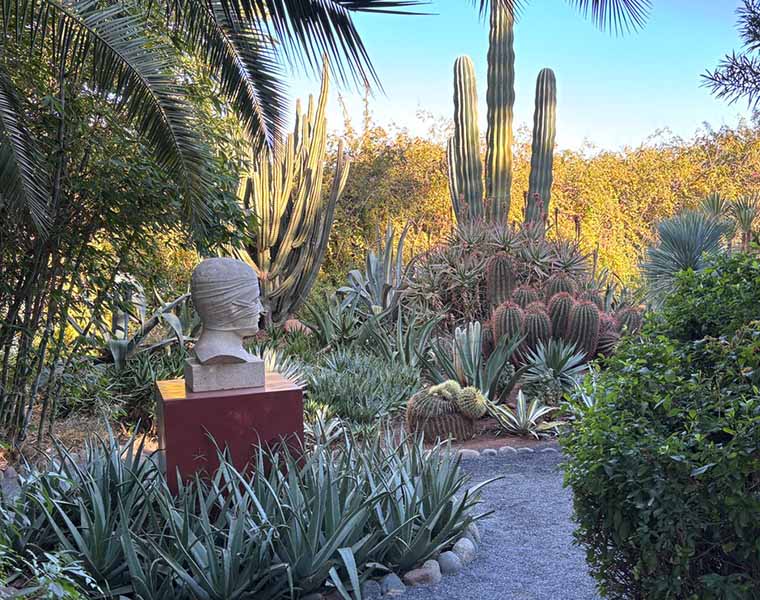
His garden offers a stimulating mix of planting and contemporary art, and nearby the cactus garden is an excellent example of dry gardening in semi-arid conditions. It’s a brilliant reminder that “lush” doesn’t have to mean thirsty – shape, repetition and restraint can be just as impactful as tropical abundance.
We also spend time in the city’s green breathing spaces, including the tranquil Menara Garden, with its origins as a 12th-century orchard. The formal pool, pavilion and surrounding trees create one of Marrakech’s most iconic scenes – especially when the mountains are mirrored in the shimmering water.
And then there’s the shift into the Ourika Valley, where organic and aromatic gardens thrive in a greener landscape. Visiting a saffron plantation brings the horticultural story right down to the level of cultivation and craft, while Nectarome offers a deep dive into local plants and their uses – culinary, therapeutic and cosmetic – alongside a beautiful pergola setting that makes you want to sit and breathe it all in.
To finish on a high note, Anima – a contemporary garden created by an Austrian artist – shows how plants and indigenous African art can be combined with real flair. It’s playful, surprising, and wonderfully modern.
By the end of the Gardens of Marrakech tour, you’ll return home with more than photographs. You’ll have a sharper eye for structure, a deeper appreciation of scent and shade, and a pocketful of ideas – whether that’s adding a water bowl to a patio, using repeated pots for rhythm, or creating a small, sheltered corner that feels like your own private courtyard.