
Michaelmas daisies – the perfect plants for autumn

Michaelmas daisies are perfect plants for autumn because they come back stronger year after year, bulk up well and provide a late source of nectar for insects. Their daisy flowers, commonly blue, purple, pink or white, add reliable colour from July right through until late October. Grow them in a sunny spot in a moisture-retentive but free-draining soil.
Ever since I was a boy, I have admired Michaelmas daisies, and after years of gardening I still think they are perfect plants for autumn. These late-flowering perennials come back stronger year after year, they bulk up well, offer a late source of nectar for insects and the blooms last well as a cut flower. And their cheerful, daisy flowers, commonly in shades of blue, purple, pink and white, add reliable colour from July right through until late October.
What is the best place to grow asters
Over the years I have grown asters in many different soils with success. Asters generally prefer a moisture-retentive, but free-draining alkaline soil, but I’ve also grown them in sandy, acidic soil too.
Asters perform much better when given a sunny spot. They will tolerate being in shade for part of the day. Choose a west, east or ideally a south-facing border or pot.
Why have asters changed their name
In 2015 some asters were re-classified with the Latin names Symphyotrichum and Eurybia. The reason for these name changes is that botanists have now classified plants more accurately. Although it might seem an annoyance it is exciting that we are discovering more about plants all the time.
Many nurseries are still using the name Aster but don’t be surprised if you see these garden favourites listed under another name.
Which are the best asters to grow
Aster x frikartii ‘Mönch’ is without doubt my favourite. In my experience it is the longest flowering of the asters, copes well without staking and has good mildew resistance. Its purple flowers and height of 80cm make it perfect for the front of a border. If you only have room for one aster, then this is it.
For a more naturalistic look, Symphyotrichum ‘Little Carlow’ has very similar flowers in a paler blue, while for a shocking purple addition to the border I’d opt for S. novi-belgii ‘Purple Dome’. S. novi-belgii ‘Marie Ballard’ and S. n-b. ‘Patricia Ballard’ are double flowered forms in blue and pink respectively. Meantime S. lateriflorum ‘Prince’ produces arching stems covered with lots of small white flowers.
Frequently asked questions
Do asters need full sun?
Asters perform much better in a sunny spot, though they will tolerate shade for part of the day. Choose a west-, east- or ideally south-facing border or pot.
Why are some asters now called Symphyotrichum?
In 2015 some asters were reclassified with the Latin names Symphyotrichum and Eurybia, as botanists classified plants more accurately. Many nurseries still use the name Aster, so you may see them listed under either name.
What is the best aster for a small garden?
If you only have room for one, Aster x frikartii ‘Mönch’ is the one to grow. It is long flowering, copes well without staking and has good mildew resistance, and its purple flowers and 80cm height suit the front of a border.
Are there double-flowered Michaelmas daisies?
Yes. Symphyotrichum novi-belgii ‘Marie Ballard’ and ‘Patricia Ballard’ are double-flowered forms in blue and pink respectively.
Related posts
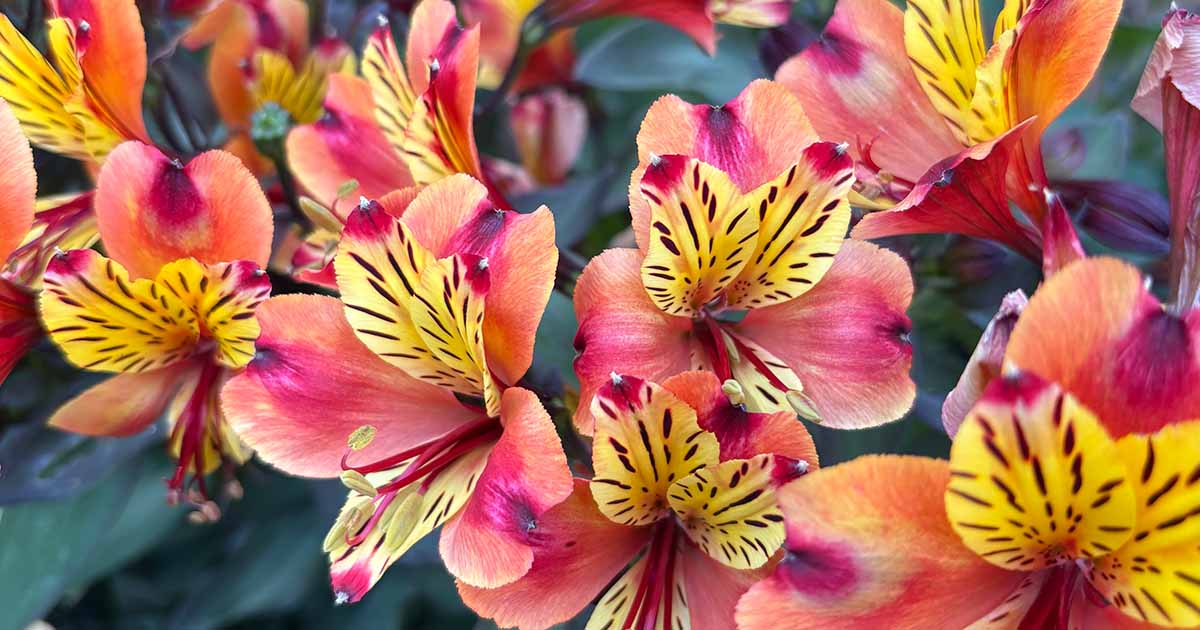
Are alstroemerias good garden plants?
Yes. Most modern alstroemerias are hardy in the UK and make rewarding border plants, flowering from late May or early .....

What is the best scented flower for winter?
Daphnes are among the best shrubs for scented flowers in late winter. Large types such as Daphne bholua, including the readily available 'Jacqueline Postill', can scent the air for many metres on a mild day. Most daphnes are evergreen and long lived, and they do best in a sheltered spot in part or dappled shade.

Purple roseling makes an unusual houseplant
Purple roseling (Callisia warszewicziana) makes a good houseplant in the UK because it copes with a wide range of temperatures. Grow it on or close to a windowsill that gets sun for at least half the day, water regularly in the growing season and reduce or withhold water in winter. It can also stand outside in the summer months.