
Why have my dahlias stopped flowering?

By midsummer, dahlias should be starting to pump out the blooms, but I’m often asked why these normally reliable plants have stopped flowering in some people’s gardens. It can even be the case that everything is fine before going on holiday; but come back even after a week and there’s not a flower to be seen. And come on, let’s face it, dahlias are often cited as some of the easiest and most floriferous of summer blooms to grow… so what could be going wrong?
If they started flowering, but have gone off the boil, then it’s likely that you’re either not removing the flowers as soon as they fade or they’ve run out of the nutrients they need to produce new buds. Meantime, if the plants have never even got into their stride, and there hasn’t been a glimmer of colour, then it is more likely to be a couple of other reasons.
Either they’re planted in the wrong place, or the plants are under stress from the weather – and that could be from heat and drought or, in very wet summer, from being waterlogged.
Scroll down to discover more…
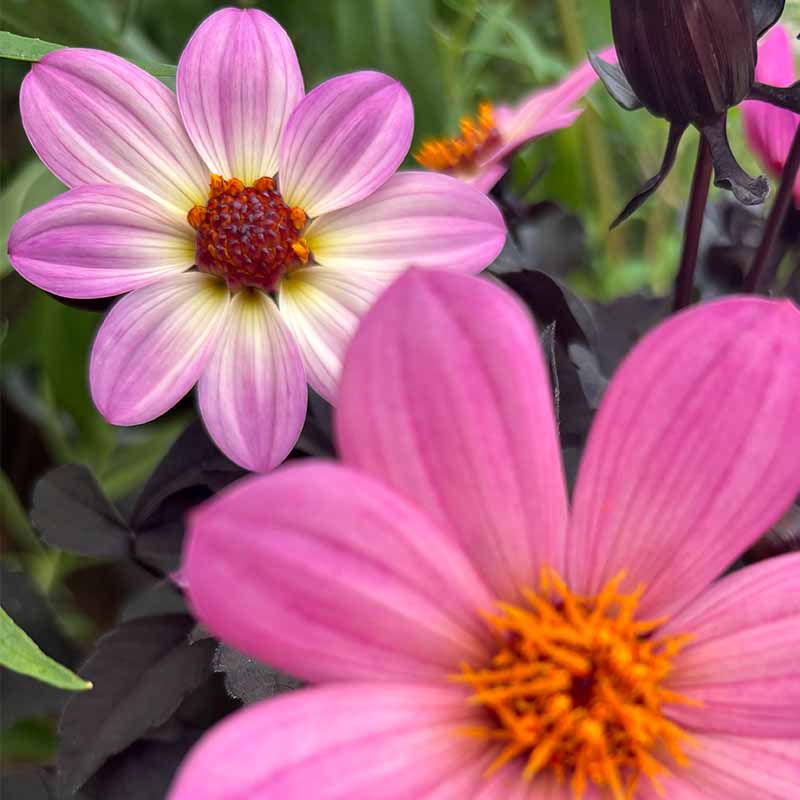
Should I remove old flowers from dahlias?
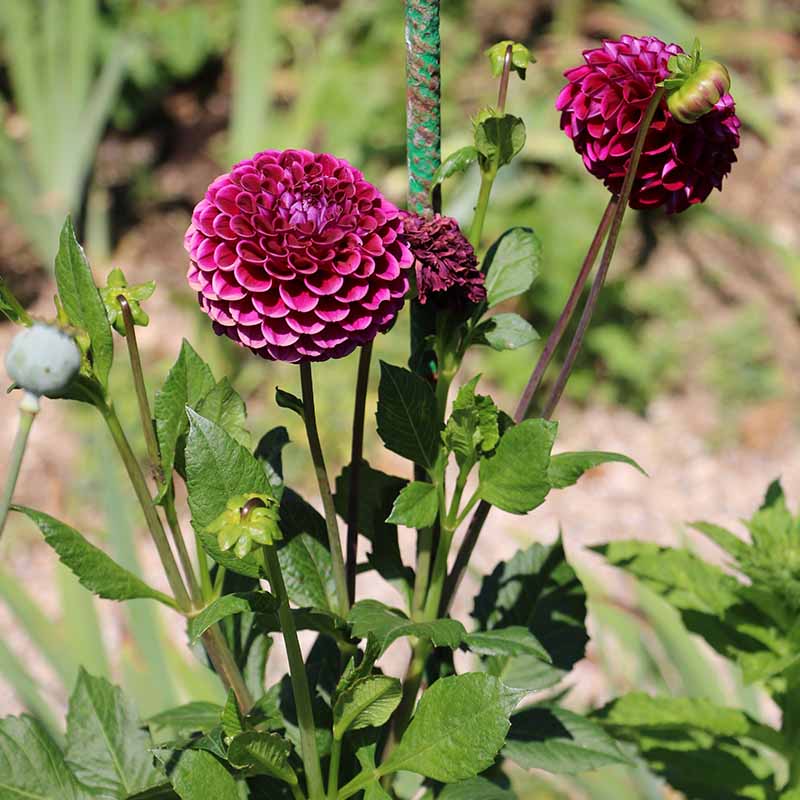
If you want to keep the flowers coming on summer plants then the most important job in summer is deadheading – something which is essential for dahlias. In many cases, once a plant has produced a batch of flowers, it produces hormones which suppress the production of more flower buds. This is so that it can concentrate its resources into the production of seed. Left to their own devices without deadheading, most dahlias will produce seed and stop blooming.
For many annual plants and tender perennials – dahlias included – which are grown for summer-long flowers, gardeners and plant breeders have developed ways of preventing the production of seed to encourage a succession of blooms. The most obvious of these involves taking off the whole flower structure as soon as the petals begin to fade to take away the potential of the decaying tissues to produce the flower-bud suppressing hormone. This the way in which dahlia growers optimise a summer display of these beautiful flowers.
The other main way in which continuous blooming can be promoted is by breeding plants that bear sterile flowers – that is, they don’t have the capacity to be pollinated or fertilised, and thence go on to produce seed. These sterile blooms, when they fade, ideally fall away from the stems of the plant – a benefit sought after by breeders who refer to this trait as ‘self cleaning’. This means that the plants don’t require deadheading. However in the case of some sterile hybrid plants, the faded bloom may shrivel and turn brown, in which case it will still need to be removed if it is not to look unsightly.
How far back should I cut faded dahlia flowers
When deadheading plants to promote more flower production – as is the case with dahlias and a whole host of other summer-blooming varieties – the faded bloom can be simply ‘pinched out’. This involves using the thumbnail or a small pair of garden snips/scissors to remove the flowerhead with the stalk immediately below it. It is usual to trace down the stem to a leaf joint (the point where the leaves are attached).
You may find that this point that there are already new flower buds forming, so take care not to damage them. This is usually the case with dahlias, making them easy plants to deadhead. It is important to regularly check the plants and remove the old blooms as soon as they start to fade. However, the petals can drop very quickly on dahlias – particularly in the case of the single forms. This means that it can be tricky to tell what are the news buds and what are the remains of the old blooms as they are a very similar shape to the inexperienced eye.
Spotting a new bud from a faded flower on dahlias
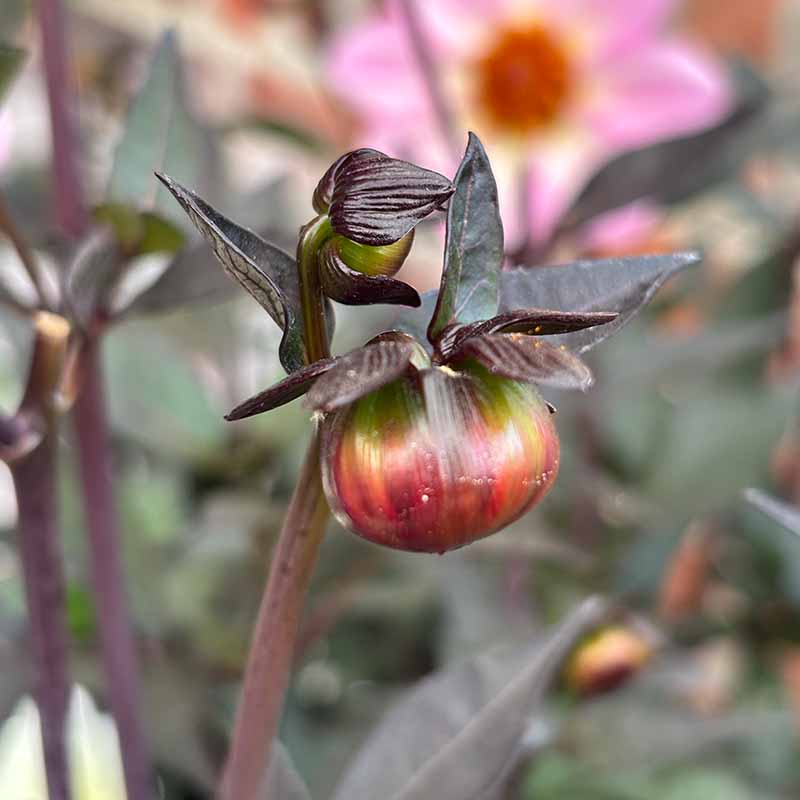
New, as yet un-opened flower buds, will be plump, with a firm dome of developing petals at the centre. The whole bud will be firm when lightly squeezed between the thumb and forefinger. In addition, the stems supporting the new flower buds will tend to form an arching ‘neck’, with the bud facing slightly down. The flower buds will also be on shorter stalks than the flower remains on the same plant.
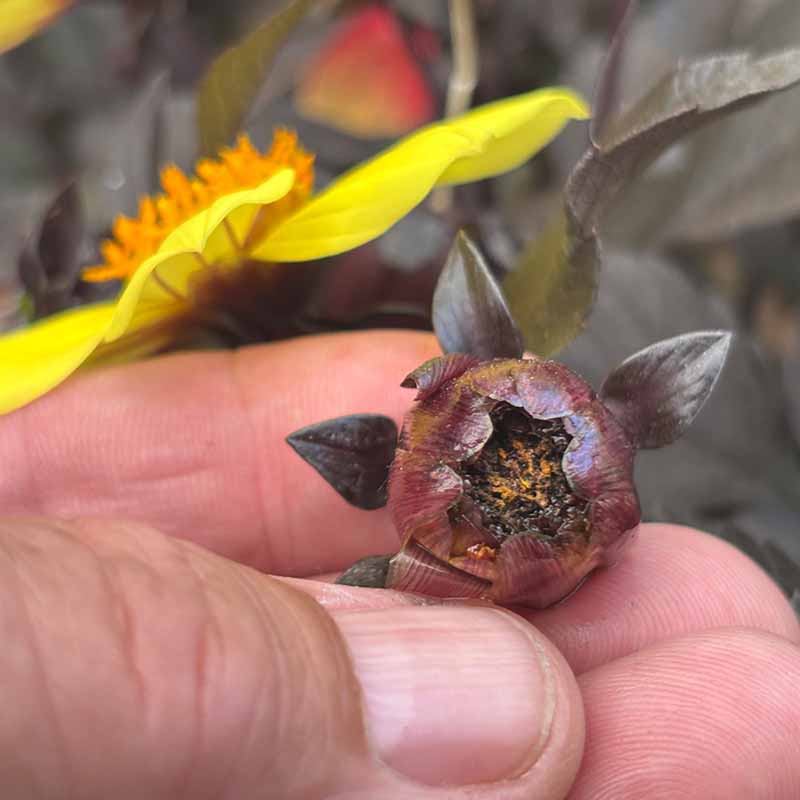
Once the faded petals drop, it can be hard to spot the old flowers. However, they can be identified by having empty centres, being soft when lightly pressed between thumb and forefinger, and usually full of moisture. The stalk of the spent flower will be stiffer than the developing, new bud. In addition the faded blooms will tend to be lower down on the stem, with new buds towards the tip.
Should I feed dahlias for more flowers?
Like the majority of plants, dahlias are able to make their own food in the form of sugar, using the chlorophyll in their foliage through the process of photosynthesis. They then use this food in conjunction with nutrients which they take in from the soil, water and air, to grow and function.
The main nutrient used for stem and leaf growth is nitrogen. And generally speaking if you have decent soil with good levels of organic matter in it, the plants can will tick along and make steady growth. Giving plants lots of nitrogen will encourage them to make lots of leafy growth, with little of no flower.
For blooms the plants need one of the other main plant nutrients, potassium (the other is phosphorus which is mainly used for healthy root development). This helps to toughen up the tissues of plants and balances the effects of nitrogen. In addition, potassium is used by the plant to produce flowers, fruit and seeds. So giving plants extra shots of potassium will usually result in a more flowery summer (if all the other conditions are right!). However, it is important not to overdo any ‘feeding’ as this can scorch plants and lead to problems. For off-the-shelf products, never exceed the recommended application rate.
High-potash fertilisers, such as the liquid formulations used on tomato plants, will promote bigger and better flowers. Sulphate of potash is another source of potassium that can be used, as is homemade comfrey tea. Make the latter in summer, by packing comfrey leaves into a dry bucket and covering with a lid. Keep the bucket in a sunny spot and the comfrey will decompose to release a dark brown-black liquid. This can be drained off, diluted 1:10 with water and then used as a liquid fertiliser on dahlias, as well as other flowering and fruiting plants.
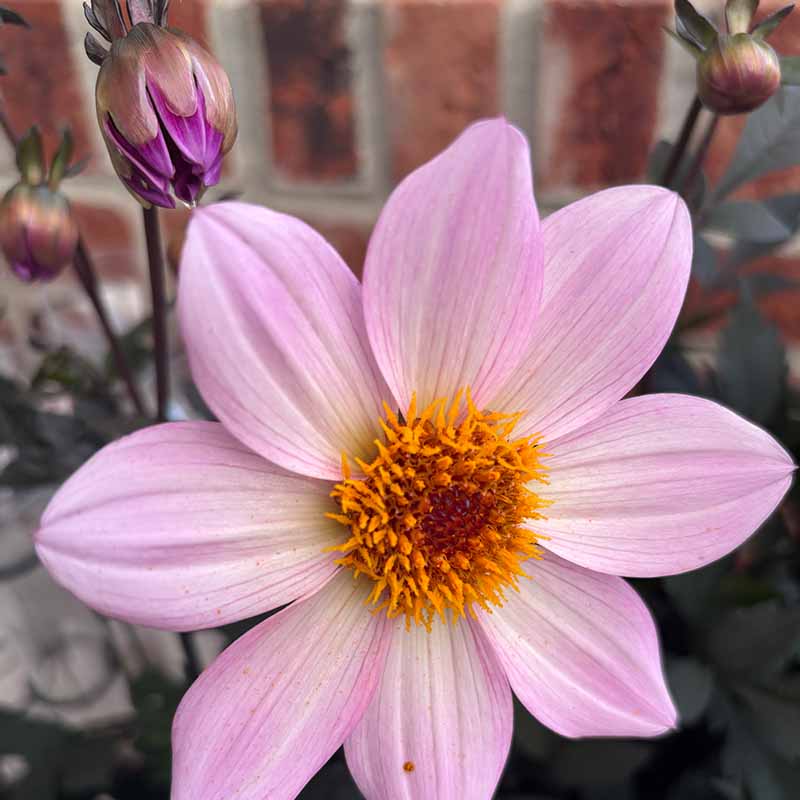
Will dahlias grow in shade?
While they will stand shade for part of the day, dahlias do best when they get plenty of direct sunlight during their growing season. They really need a minimum of 6 hours of sun which can be in the morning or afternoon, or split between the two. This means that even an open, north-facing aspect can be suitable for dahlias as in the late spring and summer they will get sun for around 3 hours, both early morning and last thing in the afternoon/evening.
Avoid locations that are additionally shaded by large shrubs or trees on the southern side of the dahlias’ planting positions. In addition, they won’t under the deep shade of trees. In open sunny positions, make sure that the soil contains plenty of well-rotted organic matter to help retain moisture in the summer to prevent the plants from running out of steam during hot, dry weather.
Do single dahlia flowers fade quicker than doubles?
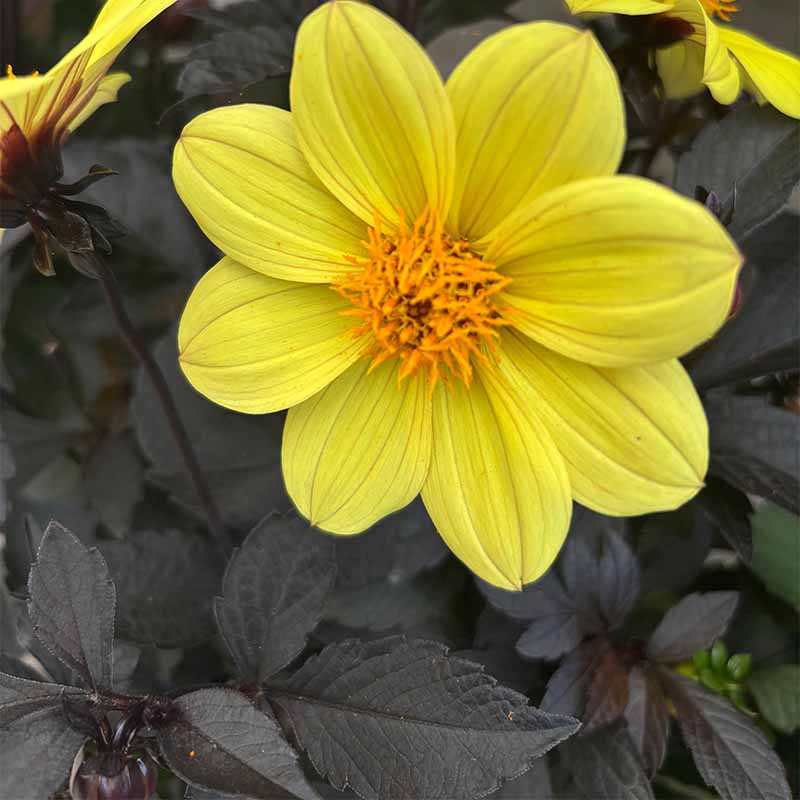
Single flowered dahlias produce a simple bloom with a single row of petals around the central, visible mass of golden, pollen bearing anthers. Most singles are easily pollinated and the few petals quickly drop from the plants.
The longevity of dahlia flowers is dependant on a number of different factors although some heavily double flowered varieties may last longer in the border or in a vase than the single types. In common with other species of flowers, many of the floral parts – in particular, the stamens – of double dahlia forms are replaced with petals. This means that the blooms are much fuller than a single variety and the plants use lots of energy to form them. Therefore there is less energy available for the development of male anthers (containing pollen) and female ovules (containing eggs or ova).
Were there are little or no male or female parts in the flower, the structure of blooms may last longer than those of single blooms, where pollination is possible. There are relatively few double varieties that have NO male or female parts. this means that there is still potential for pollination which would tend to curtail the life of the blooms and suppress the production of more flower buds.
In addition, there are some single varieties which – perhaps surprisingly – are sterile, and their blooms will therefore last longer.
Whether they are single or double, some dahlias are genetically predisposed to having flowers that last longer than others, so that the blooms of some varieties may be notable for having a long life in the garden border or when cut in a vase. To encourage the production of a long succession of blooms, however, it is crucial that all varieties should be regularly deadheaded.
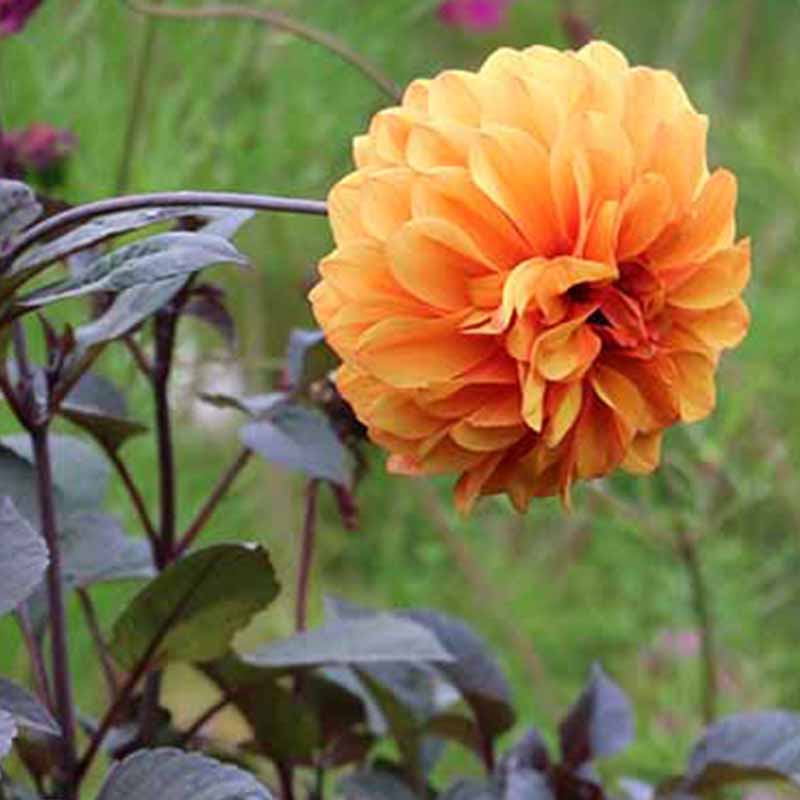
Double flowered dahlias have been bred and selected to replace some, if not all of the other flower parts with additional petals. In some but not all cases, this makes plants sterile so the blooms may last longer.
What’s the best soil for dahlias?
Relishing plenty of moisture during the growing season, dahlias do well in any good soil which contains plenty of organic matter for holding on to water for the roots to tap into. They can also cope will heavy, clay soils in the summer as these retain moisture well in all but the hottest, driest seasons: however such heavy soil can become waterlogged in winter, which usually leads to the tubers rotting if left in the ground.
Dry, free-drained, sandy soils are most likely to cause stress to dahlias. Such soils are also low in nutrients which leads to weak growth. It is, perhaps, unsurprising that dahlias are less likely to flower well, and for a prolonged period, in these conditions when compared to plants grown in moister soils with more nutrients.